Hot Rod Community Login


User Name: 

Password: 


Password Reminder       Register

 View Shopping Cart...
Hot Rods · Rat Rods · Custom Cars & Trucks · Parts · Accessories · Tools · Supplies... Connect With Other Hot Rodders...


Not Registered?
Sign Up Now


Body Parts, Body Shims, Boxing Plates, Brackets / Gussets, Brake Parts, Chassis / Suspension Parts, Clevis Pins, Cotter Pins, Dash Knobs, Decals, Door Handles / Window Cranks, Electrical Components, Emblems / Badges / Nameplates / Insignias / Trim, Engine Parts, Exterior Parts, Fasteners, Filters, Fittings, Grommets, Hardware / Fittings / Fasteners, Hitch Clips, Hose Clamps, Interior Parts, Key Stock, License Plates, Lighting / Lenses, Miscellaneous, Motorcycle Parts, O-Rings, Pedals, Shifter Knobs, Spacers, Springs, Steering, Suspension, Tabs, Trim, Vintage Tools, Vintage Tools / Parts /Collectibles / Rat Rod Stuff, Washers, Wheels / Tires, Wiring Accessories... Adhesives, Automotive Tools, Body Working Tools, Cleaners, Drill Bits / Drivers / Taps / Cutting  Wheels, General Shop Tools, Measuring Tools, Metal Working Tools, Microfiber Cloths, Polishes & Waxes, Sanding Blocks / Pads, Service Manuals / Reference, Upolstery Tools, Welding Tools... Hot Rod and Automotive Classified Ads... Books, Repair Manuals, Reference Guides, Magazines... Roadkill T-Shirts, Tank Tops, Sweat Shirts, Caps...


 VisaMastercardAmerican Express

 DiscovereCheckPayPal


Understanding Fuel Filters


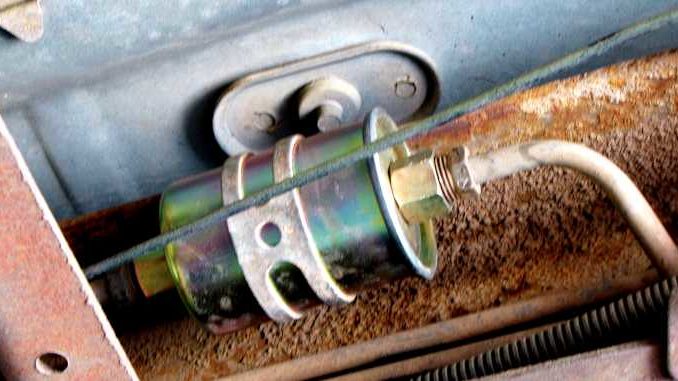
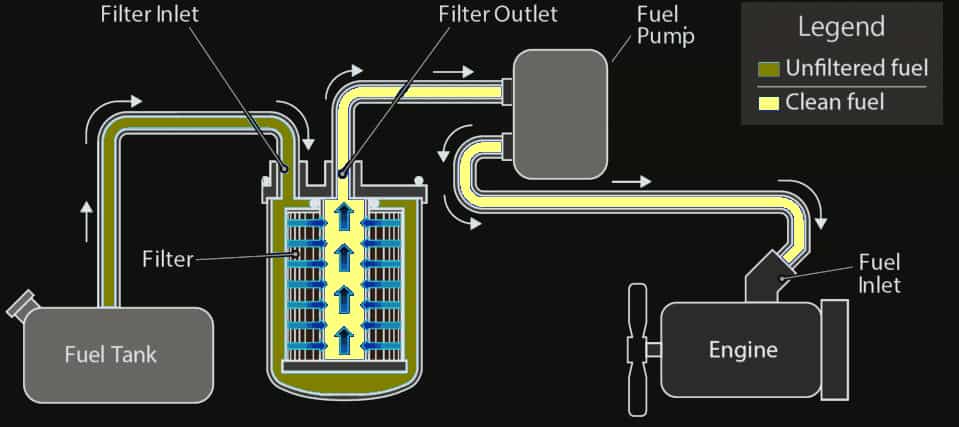
The fuel filter is found along the fuel lines, either in the engine compartment or underneath the vehicle by the fuel tank. The job of the fuel filter is to trap any large foreign particles in the fuel and stop them from getting into the engine. With the force of the fast up-and-down motion of the pistons (which compress the air-fuel mixture so it will burn more efficiently), if any large particles manage to get in the fuel, this could cause some serious damage to the engine. So, maintaining a clean fuel filter is important to the performance of a vehicle’s engine.
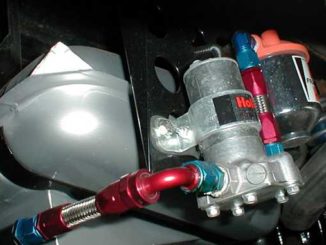
Every fuel filter is different and this is due to the differences in the fuel delivery systems. A carbureted engine (uses a vacuum to suck fuel into the engine) has quite a low-pressure fuel system. Fuel passes through fuel-resistant rubber hoses. So, the fuel filter is made of metal or plastic, with an inlet tube out one end and the outlet tube from the other, then a hose is attached over each end with a circular clamp.

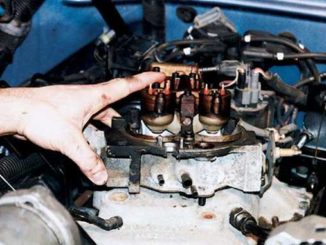
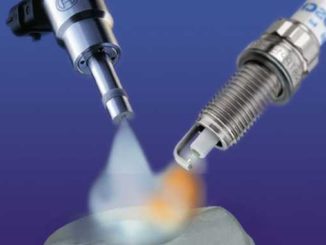
In vehicles with electronic fuel injection, the injectors will squirt fuel into each of the cylinders. Here fuel is highly pressurized by a pressure regulator. Because of the high-pressure system, the fuel lines have to be made of metal. Sometimes in these cases the fuel injected system is placed in a low-pressure section, and can be connected to the rubber hoses with clamp (almost like that in the carbureted system). However, the fuel filter is normally equipped with a threaded fitting on each end and it screws into the fuel lines on either side.

There are a few precautions you will need to take when changing the fuel filter in your vehicle: Remember that in a car with a high-pressure system, you need to relieve the pressure before you disconnect the fuel lines from the filter. In a majority of vehicles, this can be done by removing the fuse that controls the fuel pump, and then idling the car until it runs out of gas.

In some cars you can just remove the gas cap. But you need to check and make sure you can do that before you do it.

The fuel filter will only work properly if it has been placed so that the flow travels in the right direction. This should be easy enough as most fuel filter are clearly marked for your convenience, with one side showing “in” and the other “out”. The inlet should be connected to the fuel lines that come from the fuel tank (which is underneath the back of the vehicle), and the outlet should be connected to the fuel lines that go to the engine. On the odd occasion, the fuel filter may have different fittings, it can only be installed in one direction.

It is recommended by some mechanics that you should change your fuel filter once a year. But, to be on the safe side you should definitely do it at least every two years. However, if you live in a high-pollution area, or if you drive your vehicle more than the average person, then it will need more attention.


Hot Rodding is Dead...


Looking For Emblems or Trim?
New and Used Late Model Car and Truck Emblems, Badges, Insignias, Nameplates and Trim
New and Used Car and Truck Emblems, Badges, Insignias, Nameplates and Trim

VEHICLE WARS - Upload your vehicle and battle the webs' best cars, trucks, motorcycles, hot rods and more!


1938 Chevrolet Sedan Chrome Trunk Emblem
Was $52.99 Now $40.99  Save $12.00!
View Item Details...

1938 Chevrolet Sedan Chrome Trunk Emblem Details...
$52.99  $40.99   Save $12.00!

1968 Pontiac Firebird Fuel/Gas Door Emblem Finger Pull
Was $44.99 Now $35.49  Save $9.50!
View Item Details...

1968 Pontiac Firebird Fuel/Gas Door Emblem Finger Pull Details...
$44.99  $35.49   Save $9.50!

1964 Chevrolet IMPALA Rear Quarter Panel Emblem Letters
Was $38.99 Now $32.99  Save $6.00!
View Item Details...

1964 Chevrolet IMPALA Rear Quarter Panel Emblem Letters Details...
$38.99  $32.99   Save $6.00!

1964 Chevrolet IMPALA 409 Front Fender Emblems (Pair)
Was $29.99 Now $27.99  Save $2.00!
View Item Details...

1964 Chevrolet IMPALA 409 Front Fender Emblems (Pair) Details...
$29.99  $27.99   Save $2.00!

1932-35 Front, 1933-36 Rear Hood Hinge Bracket
Was $4.99 Now $3.99  Save $1.00!
View Item Details...

1932-35 Front, 1933-36 Rear Hood Hinge Bracket Details...
$4.99  $3.99   Save $1.00!