Clutches are a mechanism for transmitting rotation, which can be engaged and disengaged. When we talk about a clutch in everyday life, we mostly referring to a sub-component of a motor vehicle engine’s transmission that is designed to allow us to change gears when we drive. It allows the engagement and disengagement of the engine to the gearbox.
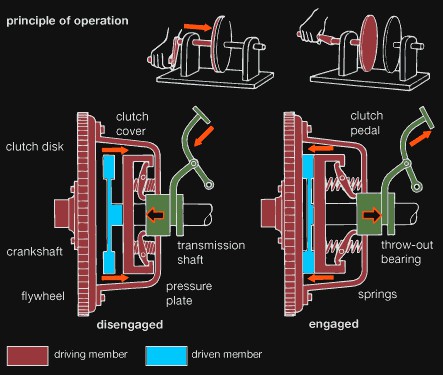
In a vehicle, the clutch is the left-most pedal that uses the hydraulics or a cable connection that goes from the pedal to the clutch mechanism. This operates the changing of the gears. If there is no pressure on the pedal this means that the clutch plates are engaged, which therefore means that you are driving. But, when you push on the pedal, this will disengage the clutch plates, allowing you to then be able to change gears.
There aren’t any other clutches found in a vehicle. Although, a radiator fan may have a clutch that is heat-activated and this design is a special fluid coupling. So when the temperature is low, the special fluid is thin and the clutch then slips. But, when the temperature is high, the fluid will then thicken and this then causes the fan to spin.
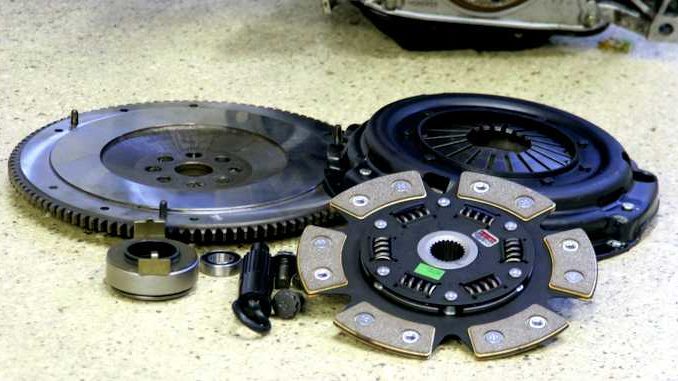
Most clutches are based on one or more friction discs that are pressed lightly together or even against a flywheel (a heavy rotating disc that resists changes in their rotation speed) using springs but do remember that there are so many different vehicle clutch designs.
The friction material is quite similar to the material found in brake shoes and brake pads and it is also used to contain asbestos (this is used in brake shoes and gaskets for its heat resistance). The pressure of the springs are released when the clutch pedal is depressed and the discs are held less tightly and they are then allowed to rotate freely.
Friction Clutches Principle of Operation
A manual transmission contains cogs for selecting the gears. These cogs have matching teeth, they a sometimes known as dog teeth, which means then that the rotation speeds of the two parts have to identically match for engagement.
The way that this speed is matched is by a secondary clutch called a synchromesh. This is a device that uses frictional contact to bring the two parts to the same speed. Then a locking mechanism called a blocker ring is used to prevent the engagement of these teeth. This is then the full movement of when you shift the gear lever into gear. But the speeds are not synchronized.
There are some vehicles that have an automatic clutch, using centrifugal forces. This is a term that may refer to two different forces that are related to rotation. It is used to engage the clutch above certain rpm (revolutions per minute).
When you put your foot on the clutch, the engine speed can sometimes need to be increased from idling. So, you would then put your foot on the accelerator pedal so that you don’t stall the engine.
But, if you raise the engine speed too much this can cause some excessive clutch plate wear and it will then result in a jerky start. This kind of acceleration is desired in drag racing and other competitions.